What Is the Most Weatherproof Garden Furniture?
You buy a lovely garden set in spring. It looks brilliant for a few months. Then autumn rolls in, the rain won’t let up, and by February you’re looking at a rusty frame or a table that’s gone soft at the joints. Sound familiar?
Here’s the honest answer before we go any further: powder-coated aluminium is generally the most weatherproof garden furniture material you can buy, with well-made teak running a close second. But that answer only tells you half the story, because “weatherproof” gets used loosely by almost every furniture brand out there, and not every aluminium set or every teak set is actually built the same way underneath.
So let’s break it down properly – material by material, weather condition by weather condition – so you know exactly what you’re paying for.
So, What Is the Most Weatherproof Garden Furniture, Really?
When people ask this question, they usually mean one thing: what can I leave outside without it falling apart?
By that measure, three materials sit above the rest:
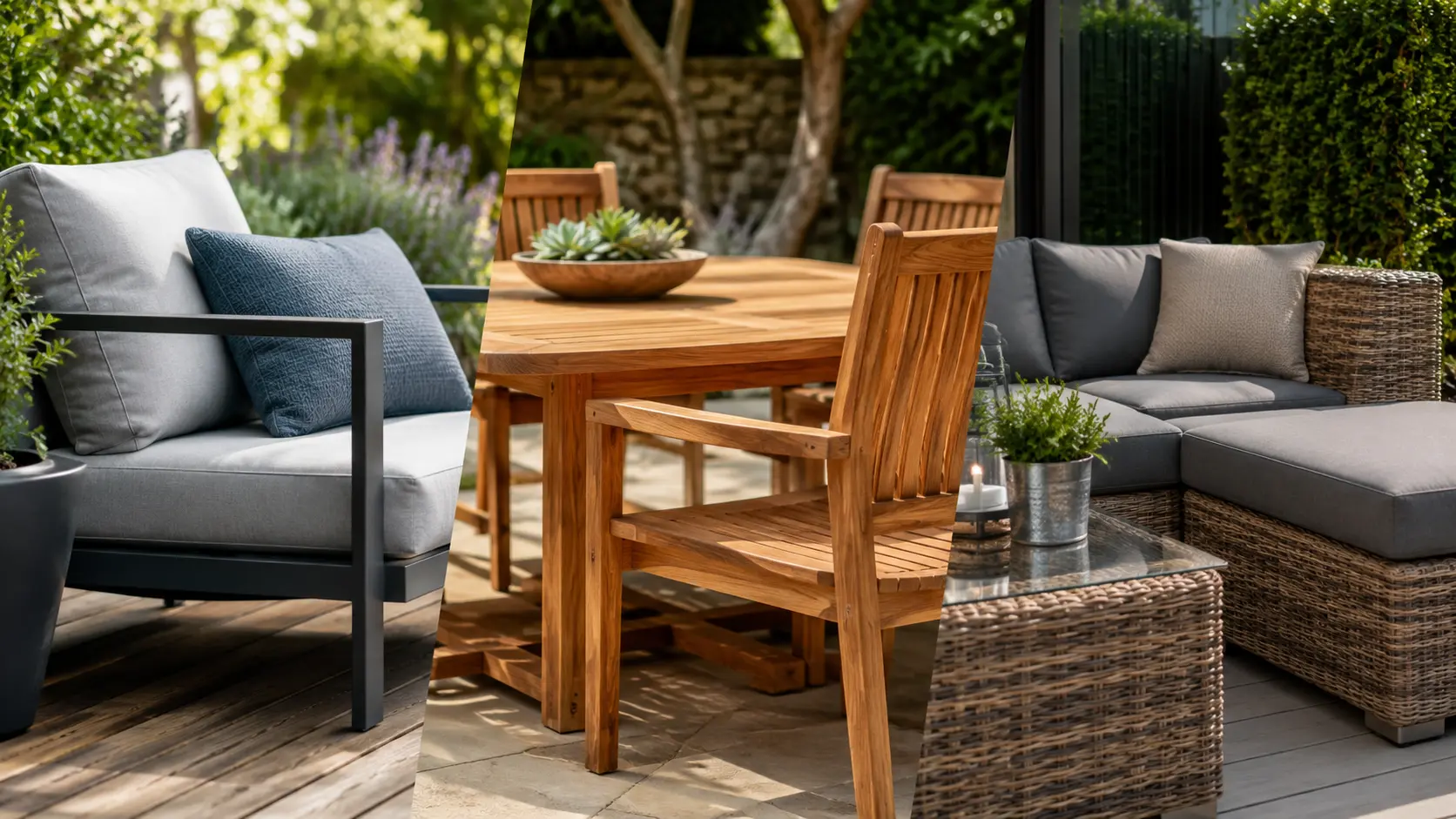
- Powder-coated aluminium – doesn’t rust, handles damp brilliantly, and barely needs looking after.
- Teak – naturally rot-resistant thanks to the oils in the wood, and gets better with age rather than worse.
- High-grade HDPE rattan on an aluminium frame – a synthetic weave that’s genuinely built for outdoor life, not just styled to look like it.
Everything else – budget steel, natural wicker, untreated softwood, thin PVC rattan – falls some way behind these three. If you want the short version, an aluminium frame gives you the least hassle, and teak gives you the longest natural lifespan. Which one wins for you really comes down to how much maintenance you’re willing to do and how much you want to spend upfront.
If you’d like the wider picture on which furniture suits which type of garden, our guide to garden furniture that can stay outside all year covers that ground in more detail. This article goes narrower and answers one specific question: which material actually wins the weatherproofing contest.
Why Aluminium Usually Comes Out on Top
Aluminium doesn’t rust. That’s the whole trick, really. Unlike steel or iron, it doesn’t contain the iron content that causes corrosion, so there’s no chemical process pushing it towards rust even after years of rain.
That said, not all aluminium furniture is built to the same standard. The frame’s wall thickness and the quality of the powder coating make a real difference here. A thin, cheaply coated frame can still dent, scratch through to bare metal, or develop a chalky finish after a couple of summers in strong sun. A heavier gauge frame with a properly cured powder coat, on the other hand, tends to shrug off years of wet weather without so much as a blemish.
This is also why aluminium is such a popular choice for coastal gardens. Salt air is brutal on most metals, but aluminium copes with it far better than steel or wrought iron ever could. If you rinse it down with fresh water now and then to clear off salt residue, it’ll keep looking sharp for well over a decade.
The one trade-off worth knowing: aluminium is light. That’s great for moving furniture around, but it can mean pieces shift a bit in strong wind unless the design has some weight low down or you’re using it with heavier cushions.
Teak: The Natural Option That Actually Holds Its Own
Teak has earned its reputation the old-fashioned way – by lasting. The wood contains natural oils and silica that fight off rot, fungus, and insects without any chemical treatment. Left completely untouched outdoors, quality teak can still be going strong after 15 to 25 years, and sometimes considerably longer.
Here’s the bit most guides skip over: teak doesn’t need protecting from rain the way other wood does. Left alone, it slowly turns a soft silver-grey, which a lot of people genuinely prefer for a relaxed, lived-in garden look. If you’d rather keep that warm honey colour, an occasional coat of teak oil does the job, but it’s a style choice rather than something the wood needs to survive.
The catches with teak are cost and weight. It’s usually the priciest material on this list, and solid teak furniture isn’t something you’ll be rearranging on a whim. It’s also worth checking for FSC certification when you buy, since that confirms the timber came from a responsibly managed forest rather than unregulated logging.
If your garden leans toward a more traditional feel, and you’re already thinking about structure and shelter, our piece on decorating a pergola pairs nicely with a teak set sitting underneath it.
What About Rattan? It Depends Entirely on the Weave
This is where most buyers get caught out. “Rattan garden furniture” is sold at every price point from budget to premium, and the difference between the cheap version and the good version is night and day.
The stuff to avoid is PVC or basic PE weave over a thin steel frame. It looks fine in the showroom, but expose it to a few UK winters and it starts to crack, fade, or go brittle at the edges – sometimes within three to five years.
What you actually want is UV-stabilised HDPE rattan woven over a powder-coated aluminium frame. That combination resists fading in sunlight, handles rain without swelling or splitting, and can realistically last 10 to 15 years or more if it’s a genuinely good grade. The weave also traps less moisture than it looks like it should, provided the design allows water to drain rather than pool.
One thing rattan doesn’t hide well: dirt. The woven texture that makes it comfortable and stylish also catches leaves, pollen, and general garden grime in the gaps. If you’ve got trees overhead, a quick brush-down every so often will keep it looking its best.
Steel and Wrought Iron: Sturdy, But the Coating Does All the Work
Steel and wrought iron furniture has one genuine advantage over aluminium: weight. That extra mass keeps it planted in windy spots, which matters if your garden catches a lot of gusts or you’ve got a busy household bumping into furniture regularly.
The problem is that steel’s weatherproofing lives entirely in its coating. Once paint or powder coat chips, moisture gets to bare metal, and rust spreads from that point outward. Welds and bolt holes are usually where trouble starts first, since those spots concentrate both stress and water. If you do go for steel, look for sealed tube ends and proper drainage in the design, and be ready to touch up any chips before they become a bigger problem.
For most UK gardens, steel makes more sense as a secondary piece – a plant stand or a small side table – rather than the main dining set that’s going to sit outside through every season.
Don’t Forget the Cushions and Fabric
Here’s the thing nobody tells you when they say a material is “weatherproof”: the frame is only half the story. Cushions and slings usually give up long before the frame does.
Cheap polyester fabric soaks up water, holds onto damp, and can start smelling musty within a season or two. Solution-dyed acrylic fabric is the better option – it’s woven from fibres that are coloured all the way through, so it resists fading in the sun and dries out much faster after rain. Textilene slings, used on a lot of loungers and sling chairs, work in a similar way and cope well with damp without going saggy.
Even the best fabric benefits from a bit of common sense. Bringing cushions in overnight, or storing them through the wettest months, will add years to their life regardless of what they’re made from. If your garden has a covered area, our guide to covered decking ideas has some practical layouts that keep furniture and fabric that little bit more sheltered without needing to drag everything indoors.
Weatherproof vs Water-Resistant: A Distinction Worth Knowing
These two terms get used interchangeably in furniture listings, and they shouldn’t be. Water-resistant means a material copes with moisture for a while before it starts to struggle. Weatherproof implies it can handle sustained exposure – rain, frost, sun, and everything in between – without breaking down.
In practice, almost nothing sold as garden furniture is fully waterproof in the strictest sense. Frames can genuinely be left outside year-round with barely a second thought. Cushions and fabric, even the good ones, are usually water-resistant rather than waterproof, which is exactly why storing them properly still matters even with premium materials.
Material Comparison at a Glance
| Material | Rust/Rot Resistance | UV Resistance | Typical Lifespan | Maintenance | Best For |
|---|---|---|---|---|---|
| Powder-coated aluminium | Excellent | Very good | 15-25 years | Very low | Coastal gardens, low-effort setups |
| Teak (FSC-certified) | Excellent (natural) | Good, may need oiling | 15-25+ years | Low to moderate | Traditional gardens, long-term investment |
| High-grade HDPE rattan | Good | Very good | 10-15 years | Low | Lounge sets, modular seating |
| Budget PE/PVC rattan | Poor | Poor | 3-5 years | Moderate | Not recommended for year-round use |
| Powder-coated steel/iron | Fair (coating-dependent) | Good | 8-15 years | Moderate | Windy spots, secondary pieces |
| Untreated softwood | Poor | Poor | 2-5 years | High | Short-term or budget use only |
Which One Should You Actually Buy?
There’s no single right answer here, but a few simple questions will point you in the right direction.
If you want to spend the least amount of time thinking about your furniture ever again, aluminium is your best bet. It’s the closest thing to set-and-forget that outdoor furniture gets.
If you’re near the coast, stick to aluminium or teak, and steer well clear of untreated steel – salt air will find every weak spot in a coating faster than you’d expect.
If comfort and a softer look matter more to you than absolute lowest maintenance, quality HDPE rattan gives you that lounge-set feel without the fragility of natural wicker.
And if you’re planning to keep the same furniture for decades rather than years, teak’s higher upfront cost tends to even out over time. It’s also worth thinking about how the furniture fits your wider garden plans – if you’re building out a proper entertaining space, our outdoor living space ideas piece is a useful next read for planning layout around whichever material you choose.
A Few Care Habits That Extend Any Material’s Life
Even the most weatherproof garden furniture benefits from a little basic care. None of this takes much effort, but it adds up over the years.
Give frames a wipe-down every few weeks during the wetter months to clear off dirt and standing moisture before it settles into joints. Store or cover cushions when heavy rain is forecast, even if the fabric is meant to resist it. Rinse aluminium and any metal furniture with fresh water occasionally if you’re near the coast. And if you’ve got space for a pergola or overhead cover, our guide on pergola privacy ideas shows how a bit of overhead shelter can take real pressure off your furniture during the worst of the British weather.
None of this is a full-time job. It’s the difference between furniture that looks tired after three years and furniture that still looks smart after ten.
FAQs
1. Is aluminium or teak more weatherproof?
Ans: Both perform excellently, just in different ways. Aluminium physically cannot rust and needs almost no upkeep, while teak resists rot naturally but benefits from occasional oiling if you want to keep its original colour. For the lowest effort, aluminium wins. For the longest natural lifespan with proper care, teak often lasts longer.
2. Can rattan furniture stay outside all winter?
Ans: High-quality HDPE rattan on an aluminium frame can, yes. Budget PE or PVC rattan on a steel frame generally can’t handle a full winter outdoors without showing signs of wear within a few years.
3. What’s the difference between weatherproof and waterproof garden furniture?
Ans: Weatherproof means a material can handle ongoing exposure to rain, sun, and frost without breaking down. Waterproof implies complete resistance to water, which very few garden furniture materials, especially cushions, truly achieve. Most “waterproof” cushions are more accurately water-resistant.
4. Does powder-coated steel count as weatherproof?
Ans: To an extent, but its weatherproofing depends entirely on the coating staying intact. Once it chips, particularly at welds or joints, rust can set in fairly quickly. It’s a reasonable choice for furniture that needs extra weight in windy spots, but it’s not as reliably low-maintenance as aluminium.
5. How long should weatherproof garden furniture actually last?
Ans: A genuinely well-made set, whether aluminium, teak, or quality HDPE rattan, should comfortably last 10 to 15 years with minimal care, and often much longer. If a set is showing serious wear within two or three years, it likely wasn’t built from the materials it claimed to be.
Conclusion
If you take one thing away from this, let it be this: the material matters more than the marketing. Powder-coated aluminium is the safest bet if you want furniture that copes with British weather without asking anything of you. Teak is the natural alternative that rewards a little occasional care with decades of use. And if you go the rattan route, spend the extra bit to get proper UV-stabilised HDPE on an aluminium frame, because the cheap version simply won’t go the distance.
Whichever you choose, a little basic care goes a long way. Get the material right from the start, and your garden furniture will still be earning its keep long after the furniture next door has given up the ghost.

Raj Kumar Prasad is a lifestyle content creator and digital publisher passionate about sharing practical wellness tips, smart living ideas, product insights, and everyday lifestyle guidance. Through Smart Lifestyle Review, he focuses on helping readers make smarter daily choices with simple and useful content.