
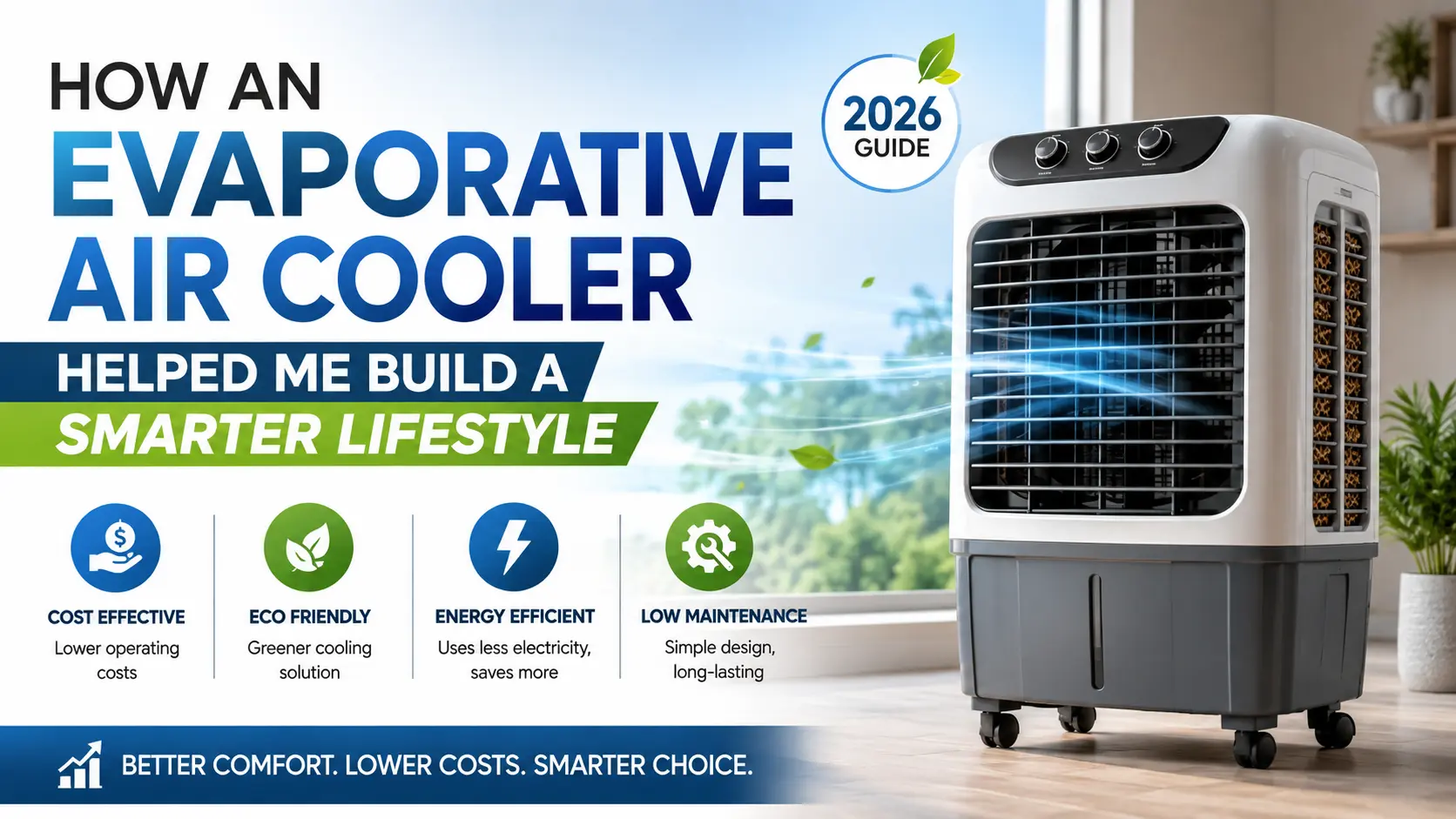
How an Evaporative Air Cooler Helped Me Build a Smarter Lifestyle
In 2026, keeping indoor spaces cool has become more important than ever as rising temperatures and increasing energy costs affect homes, businesses, and industrial facilities. When I started comparing cooling options, I realized that understanding both performance and long-term value was just as important as the initial purchase price.
I found that many people are moving away from traditional refrigerated air conditioning because of its higher electricity consumption and maintenance requirements. Evaporative air coolers have become a practical alternative, offering energy-efficient cooling with lower operating costs in suitable climate conditions.
As I researched evaporative air cooler costs, I learned that focusing only on the upfront purchase price can be misleading. To make a smart investment, I also consider installation expenses, electricity usage, maintenance costs, and the overall cost of ownership over the system’s lifespan.
Why Evaporative Cooling is the Cost-Effective Choice in 2026
When I compare evaporative cooling with traditional air conditioning, the biggest difference I notice is energy consumption. Evaporative air coolers use significantly less electricity because they rely on water evaporation instead of energy-intensive compressors, helping reduce monthly utility bills while delivering effective cooling in dry climates.
Another reason I consider evaporative cooling a smart investment is its environmentally friendly operation. Unlike conventional air conditioners, evaporative coolers do not use harmful refrigerants that contribute to greenhouse gas emissions. This makes them a more sustainable cooling solution for homeowners and businesses seeking greener alternatives.
I also appreciate the simplicity of the natural cooling process. Warm outdoor air passes through water-saturated cooling pads, where evaporation lowers the air temperature before it circulates indoors. This efficient design reduces operating costs, minimizes maintenance requirements, and delivers long-term economic benefits for many cooling applications.
Cost Breakdown by Application (2026 Pricing)
The cost of an evaporative air cooler depends on where I plan to use it and the cooling capacity required. Residential models are generally affordable, while commercial and industrial systems require larger airflow, customized designs, and professional installation. Comparing these categories helps me choose the right solution without overspending.
Note: Insert a pricing comparison table here showing estimated costs for residential, commercial, and industrial evaporative cooling systems.
Residential Cooling: Portable & Window Units
When I need cooling for a home, apartment, or small office, portable and window evaporative air coolers are usually the most practical choice. These models are designed for compact spaces, require minimal installation, and offer an economical alternative to traditional air conditioning in suitable climates.
The price mainly depends on water tank capacity, airflow (CFM), cooling pad quality, energy efficiency, smart controls, digital displays, and remote functionality. Premium models with larger tanks and advanced features generally cost more than basic units designed for personal cooling.
In 2026, I can expect most residential evaporative air coolers to range between $60 and $500, depending on their size, brand, and features. Larger desert coolers and high-performance models typically fall at the upper end of this price range.
Commercial Solutions: Offices, Restaurants & Retail
For offices, restaurants, retail stores, and similar commercial spaces, I need a cooling solution that balances comfort, appearance, and operating efficiency. Commercial evaporative coolers are designed to cool larger occupied areas while maintaining quieter operation and consistent airflow throughout the space.
Installation costs vary depending on building layout, ventilation requirements, electrical connections, and whether the system uses portable, fixed, or ducted configurations. Proper placement is essential to maximize airflow and achieve effective zone cooling for customers and employees.
In 2026, most mid-sized commercial evaporative cooling solutions typically range from $1,000 to $8,000, excluding complex installation or custom ductwork. The final investment depends on cooling capacity, building size, and project-specific requirements.
Industrial & Factory Cooling Systems
Industrial evaporative cooling systems are built for warehouses, factories, manufacturing plants, workshops, and other large facilities where high airflow is essential. These heavy-duty systems deliver substantial cooling capacity while consuming significantly less electricity than many conventional industrial air conditioning systems.
Many industrial projects require customized engineering, including ducting layouts, centralized cooling networks, multiple cooling units, automated controls, and site-specific airflow calculations. These design requirements have a major influence on the total project cost and installation timeline.
For large industrial facilities in 2026, system costs commonly start around $5,000 and can exceed $100,000 for fully customized central evaporative cooling installations. Although the initial investment is higher, the long-term energy savings and lower operating costs often provide a strong return on investment.
Key Factors Influencing Your Total Investment
When I estimate the total cost of an evaporative air cooling system, I look beyond the purchase price. The overall investment depends on cooling capacity, installation complexity, material quality, and advanced technology features that affect both upfront expenses and long-term operating costs.
Capacity & Performance
Choosing the correct cooling capacity is one of the most important decisions I make before buying an evaporative air cooler. A system that is too small may struggle to cool the space effectively, while an oversized unit can increase the initial investment without delivering proportional benefits.
I always match the cooler’s airflow capacity, measured in cubic feet per minute (CFM), to the square footage and ventilation requirements of the building. Proper sizing improves cooling efficiency, reduces energy waste, and helps achieve better long-term operating performance.
Installation Costs
Installation costs vary depending on the type of evaporative cooling system I choose. Portable and window coolers usually require little or no professional installation, making them the most budget-friendly option for homes and small offices.
Industrial and commercial systems often require professional installation, including ductwork, electrical connections, water supply lines, structural mounting, and airflow balancing. These additional requirements increase the initial investment but ensure reliable performance and maximum cooling efficiency.
Quality & Materials
The quality of components has a direct impact on both durability and maintenance costs. I pay close attention to the cooling pad material because it influences cooling efficiency, water retention, and the frequency of replacement throughout the system’s lifespan.
Honeycomb cooling pads generally provide better cooling performance, improved durability, and longer service life than traditional wood wool pads. Likewise, corrosion-resistant materials such as galvanized steel or UV-stabilized plastic bodies help extend equipment life in demanding operating environments.
Technology Features
Modern evaporative air coolers include smart technologies that improve convenience, efficiency, and system monitoring. Depending on my budget and application, I may choose models equipped with Wi-Fi connectivity, programmable timers, digital displays, and remote control functionality.
For commercial and industrial facilities, advanced features such as IoT integration, intelligent sensors, automatic water level management, variable-speed fans, and predictive maintenance monitoring can optimize performance while reducing operating costs over the life of the cooling system.
Operational & Maintenance Costs: The Total Cost of Ownership
When I evaluate an evaporative air cooler, I consider more than just the purchase price. The true cost of ownership includes electricity consumption, routine maintenance, replacement parts, and the system’s expected lifespan. Looking at these factors helps me understand the long-term value of my investment.
Electricity Savings
One of the biggest advantages I notice is the lower electricity consumption compared to traditional air conditioning. Evaporative coolers primarily use a fan and water pump, while refrigerated AC systems rely on power-hungry compressors that consume significantly more energy.
Because of this simpler operation, I can often reduce my cooling-related electricity costs, especially when cooling large or well-ventilated spaces. Over several years, these energy savings can offset a substantial portion of the initial equipment cost.
Maintenance Costs
Routine maintenance is simple and helps keep the cooling system operating efficiently. I regularly clean the cooling pads, inspect the water pump, check the water distribution system, and remove dust from the fan and motor to maintain consistent airflow.
Most maintenance tasks require minimal tools and can be completed without significant downtime. Replacing worn cooling pads, cleaning the water tank, and inspecting moving components on schedule help prevent unexpected repairs and maintain cooling performance.
Long-Term Lifespan
I have found that regular maintenance significantly extends the lifespan of an evaporative air cooler. Keeping the system clean, replacing consumable components when necessary, and addressing minor issues early reduces wear on major mechanical parts.
With proper care and manufacturer-recommended servicing, a quality evaporative cooling system can deliver reliable performance for many years. This longer service life improves return on investment while keeping overall ownership costs lower than many conventional cooling systems.
Conclusion
Understanding the complete cost of an evaporative air cooler means looking beyond the purchase price. When I compare equipment costs, installation, electricity usage, maintenance, and expected lifespan, evaporative cooling consistently offers strong long-term value for many residential, commercial, and industrial applications.
Whether I need an affordable cooler for my home or a high-capacity system for a warehouse or factory, selecting the right solution depends on the size of the space, cooling requirements, climate, and long-term operating goals. Choosing the correct system helps maximize comfort while keeping ownership costs under control.
If you’re planning to invest in an evaporative cooling system, explore Evapoler’s range of residential, commercial, and industrial cooling solutions. For large or specialized projects, request a customized consultation and quotation to find the most efficient system for your specific application.

Raj Kumar Prasad is a lifestyle content creator and digital publisher passionate about sharing practical wellness tips, smart living ideas, product insights, and everyday lifestyle guidance. Through Smart Lifestyle Review, he focuses on helping readers make smarter daily choices with simple and useful content.